Testimonial

Get in touch

12.1k
patients
1,647
patients with 2+ QOF/LTC conditions
£76k
annual capacity unlocked
“You’ve no idea how much you’ve made my life easier. I feel like I’m cheating. It’s so much fun.”
How Cape Hill Medical Centre moved from manual lists, and blood form generations for recall to an automated process, halving admin time, unlocking ~£76k a year for the practice and importantly, making the day job more enjoyable!
“The dashboard has been a godsend. Click a button, pick the areas, pick the booking link - and it does the work.”
Cape Hill Medical Centre serves just over 12,000 patients. Like many practices, recall relied on emails, printed lists, calls, letters, texts, manual booking, QOF coding and individually generated blood forms.
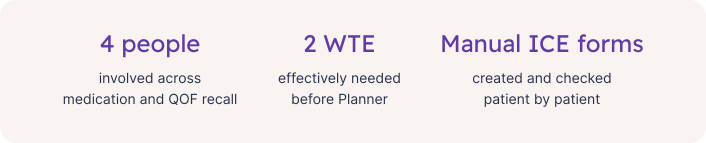
Before Planner, recall involved four people across medication and QOF recall. Today, Cape Hill can run recalls with roughly half that capacity because the repetitive work now sits in a guided workflow.
The result: fewer manual steps, capacity released to focus on other pressing areas, and a recall process the team describes as far less daunting day to day. Technology in support of our staff.
Recall previously at Cape Hill was fragmented and incredibly labour intensive. Staff worked from several lists that took an eternity to load on EMIS then contacted patients manually, generated forms individually and then booked appointments. Patients were being overwhelmed with multiple SMS’s for different long-term conditions and all it then had to be logged back into the clinical record. Every single week. Worse yet, this knowledge lived inside the head of just a few individuals, so when annual or sick leave came, the context was not there for others to step in.
The biggest pain was pathology form generation. Each patient needed the right tests requested against the right conditions, with details checked before the form was created. Repeated patient by patient, this was a major workload.
Clinical capacity was already stretched similar to many practices, so Cape Hill wanted a flow for multi-condition patients, so that patients would not need to be brought in several times a year when they ought to have been seen once, holistically.
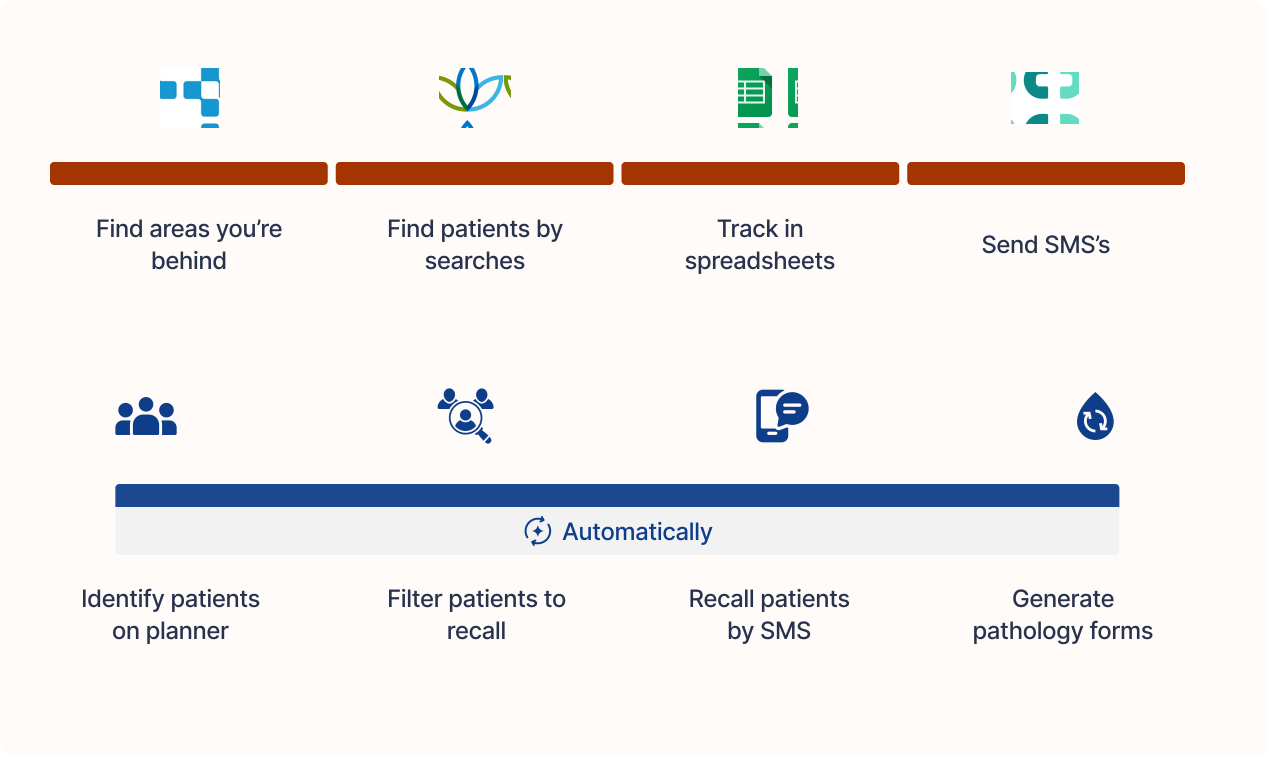
Planner replaced static lists with an automated workflow. Setting the rules up once, the team can see who is due, select what needs investigating, generate ICE forms, send booking links, log contact and move recall forward without rebuilding the process each time.
Instead of checking each patient manually, creating forms one by one and recording actions separately, staff work through Planner and confirm the next step.
That matters because recall is a chain: identify patients, check conditions, request tests, contact them, book appointments, record contact, code activity and follow up. Planner reduces friction across the chain.
Cape Hill’s clearest result is staff capacity. Manual effort has dropped and halved the administrative workload. As well as this, there are higher blood pressure submission rates and lower DNA rates since patients are being recalled by Planner. This is due to the automated reminders SMS’s that are built in (both coded for exception reporting purposes also).
With over 14% of Cape Hill’s total patient register having more than one condition, the multi-condition appointment algorithm is on track to release 11% extra clinical capacity, simply by ensuring patients are seen for all conditions in one visit. This precious time that staff can immediately deploy into other areas or simply have time to lunch during their clinic days - wouldn’t that be nice. With patients living with multi-morbidities continuing to increase year on year, the planner workflow will future proof the practice for years to come.
“It’s taken away half the time we used to spend doing manual work.”


“Don’t hesitate. Just do it. It’s well worth the money.”